The Fire Within

Spirituality is about God’s longing to be present to us.
We become aware of who we are in the context of our relationship with a loving God.

Have you ever had an experience that you might have described as a “spiritual experience”? What was it about this experience that caused you to believe it was spiritual in nature? What impact did the experience have on you? How did this experience shape your sense of God and God’s presence in your life?

These are questions that focus on an element of our practice as Christians that seems locked in the realm of otherworldliness. You may not see yourself as a very spiritual person and a spiritual experience may have left you feeling puzzled, or perhaps unnerved. It’s also possible that these experiences might leave you with a feeling of deep peace and a sense of connectedness to God.

The term “spirituality” seems to be something we are hearing more about these days. In the past 10 or 20 years, there has been an explosion of interest in the topic, from guests on the Oprah Show to new books on the topic to a surge of interest in Eastern practices such as Yoga and forms of meditation.

The notion of spirituality is often not well understood in our Western culture. We tend to see spirituality as something that might interest only a few, and certainly not something that is in any way connected to our understanding of our practice as Anglicans.

We may see spirituality as something paranormal, other worldly, mystical, New Age-y and on the fringes.
This is a tragic misunderstanding.

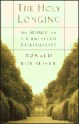
We may see spirituality as something paranormal, other worldly, mystical, New Age-y and on the fringes. Yet, Ronald Rolheiser, in his book The Holy Longing says that this is a tragic misunderstanding.

Rolheiser asserts that everyone has to have a spirituality – either a life-giving one or a destructive one. Spirituality, Rolheiser says, concerns what we do with desire. It takes root within us and is all about how we shape and discipline the fire or passion that dwells within us. Spirituality is about what we do with our soul or spirit – the life pulse within us that makes us alive.

A healthy soul, Rolheiser suggests, must do two things for us. First, it must put fire in our veins to keep us energized, vibrant, living with zest, and full of hope as we sense that life is beautiful and worth living. And secondly, a healthy soul must keep us fixed together, to continually give us a sense of who we are, where we came from, where we are going and what sense there is in all of this.

Rolheiser explains that there is a discontent (another word for soul and spirit) in all things and what those things, or persons, do with that discontent is their spirituality.

True spirituality is not a search for perfection or control or the door to the next world;
it is a search for divine union now.

In his most recent book The Naked Now, Richard Rohr explains that much of religion has become a search for social order, group cohesion, and personal worthiness, or a way of escaping into the next world, which unfortunately destroys most of its transformative power. True spirituality, Rohr says, is not a search for perfection or control or the door to the next world; it is a search for divine union now. The great discovery, Rohr tells us, is that what we are searching for has already been given. Spirituality is about God’s longing to be present to us. We become aware of who we are in the context of our relationship with a loving God. Christian spirituality is about our own inner transformation as we become more and more present in our relationship to God. Rohr refers to it as falling into and undergoing God. Spirituality is a new level of awareness within ourselves of God’s presence and action in the innermost parts of our being.

As we grow into adulthood, our minds become more complex and preoccupied with day to day details. Cynthia Bourgeault in her book, Centering Prayer and Inner Awakening, explains that we spend so much of our adult energies thinking, planning, worrying, trying to get ahead or stay afloat, that we lose touch with a natural intimacy with God deep within us. Tools such as Centering Prayer or Christian meditation help us to withdraw from the demands of daily life and listen again to the presence of God deep within us. We need to move beyond ordinary awareness to a deeper sense of connection with the Source of our being. This allows us to become more and more transformed into the person God knows us to be – our True Selves. Bourgeault refers to this as a case of mistaken identity: the person we normally take ourselves to be – the busy, anxious “I” so preoccupied with goals, fears, desires and issues – is never even remotely the whole of who we are.

Do you have a longing to explore this deeper connection with God? As part of the Growing towards God series, Introduction to Spirituality will run for five sessions, beginning in October and finishing up just before Lent. This will be an opportunity to explore and develop some tools for listening to God and deepening our awareness of God at work within us and the ways in which God may be calling us to respond to the world around us. Please join us for what promises to be a lively growing experience!
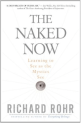
The Naked Now, by Richard Rohr
The Holy Longing, by Ronald Rolheiser

Education: re-evaluating our life’s direction

Stepping off the treadmill

This time of resting seemed to me to be stepping out into an unknown wilderness. It was a feeling of wandering, not really sure where I was going, not being able to see the end point, but knowing that I must take that step or risk the consequences…

This past spring I found myself feeling quite tired – and cranky. I’m learning that it’s important to pay attention to these feelings within ourselves. I had experienced a lot of major changes at work with a new regional director, new ways of doing things, new approaches, and all of this on top of an enormously heavy workload. My job of caring for the staff who care for the patients in health care is often an area that is underfunded and unrecognized. And so I found myself feeling tired – and cranky. I felt as though I was at a crossroads in my career without any idea what the next step was. I decided to take some time off and rest. I thought I would just take a few days, perhaps a week or two, but my doctor, in his wisdom, suggested I take at least a month. And so I found myself stepping off the treadmill of work and facing an extended time of rest – foreign territory for me!

In this post…

Read more from Nancy
Helpful book suggestions

Continue reading

Wechetowin Update

copied from the September edition of The Rupert’s Land News

Indigenous spirituality course launched

To help survivors of the residential schools, Rupert’s Land Wechetowin Inc. encouraged the creation of a two-year diploma program “Indigenous Spirituality and Pastoral Care”, at the University of Winnipeg that will train students to offer pastoral and spiritual care in jails, hospitals, long term care residences and missions. The first students are being accepted this year, many with bursary support.

To help residential school survivors, Wechetowin encouraged the creation of a two-year diploma program “Indigenous Spirituality and Pastoral Care” at the University of Winnipeg.

The program is accessible to First Nations who may have been out of the educational system for some time. Manitoba is currently the only province in Canada that is developing a Spiritual Care component of the health care system. Acting Executive Director Ko’ona Cochrane says “Wechetowin is working with the Diocese for a Sacred Circle in September. We’re going to be procuring some youth from the Canada World Youth Program, students from Kenya and Canada who will learn more about the legacy of residential schools. I have a plan put together for them to spend three days a week working with us and learning about the work Wechetowin does. We are a grassroots initiative that helps people navigate through the urban environment.”

Walking With Wechetowin

All of the programs designed by Wechetowin are intended to address healing, wellness and reconciliation.

Wechetowin board members are also preparing their second annual Walking With Wechetowin walk-athon. Wechetowin is a Cree word for “People Helping People” as it is a grassroots organization started by individuals reaching out to those in need. Formed in 2006 by the Rupert’s Land Aboriginal Circle, Wechetowin offers more than pastoral care for Aboriginal people. All of the programs designed by Wechetowin are intended to address healing, wellness and reconciliation. This is done holistically from restorative justice education to ‘people helping people’ directly visiting hospitals and institutions giving others hope.

This year the “Walking With Wechetowin” fundraiser on Sept 24 will be a 10 km walk within Winnipeg. Cochrane says “Last year we walked 30 kms from Winnipeg to Selkirk. The walk is intended to help bring awareness for those who have charted a course for healing, as many Aboriginal people have struggled with issues of addiction and high rates of recidivism, we can now see positive change happening.”

Sponsorship forms are available through the office, to join Walking With Wechetowin or learn more about their endeavours,
please call 204-582-0130 or e-mail wechetowin@stjohnscathedral.ca

Education: Faith Horizons 2011, October 14 & 15

copied from an article by Jana Charlo
published in the September edition of The Rupert’s Land News

Xpressions:
Transformative Power of the Arts

Explore the arts and how their transforming power can benefit your parish, you community and yourself at this year’s Faith Horizons’ Xpressions: Transformative Power of the Arts, October 14 and 15.

Guest Speakers

Drs. Vivian Nix-Early and Nathan Corbitt, co-founders of Build-a-Bridge International will be the guest speakers. Build-a-Bridge is a community-based organization that offers creative education to at-risk youth using the arts. They are also co-authors of Taking it to the Streets: Using the Arts to Transform Your Community and Teach.

Dr. Nix-Early is Dean of the Campolo School for Social Change at Eastern University in Philadelphia. Dr. Corbitt is Coordinator of the Arts in Transformation Concentration in Eastern’s Urban Studies Department.

Workshops

After listening and learning from these guest speakers, you will have the chance to choose from a wide array of workshops. Workshop leaders and titles will be:

  1. The Poet’s Ear for the Gospel:
    How One Congregation is Exploring New Ways of Telling the Truth
    saint benedict’s table 
  2.  Jam Session with Geoff
    Geoff Woodcroft
  3. Indigenous Art Forms and their Meanings
    Dorothy Monkman
  4. Creative Art: A Hands-On Exercise
    Jordan Miller, Cre8ery Gallery
  5. Seventeen and Crazy:
    Wrestling with the Roles of Art and the Church in the Adolescent Years
    Davis Plett
  6. Caribbean Music and Worship
    Jennifer Nembhard
  7. Art at the Margins
    Graffiti Gallery
  8. O Antiphons
    David Fries en and Fenella Temmerman
  9. Building for Faith: Church Architecture in Winnipeg
    Don Ross
  10. The Arts and the Deacon in Service to the World
    The Diaconate Working Group
  11. Blending Worship Styles
    Michèle Barr
  12. Art in Action: Expressive Arts Therapy and Social Change
    Dietrich Bartel
  13. Knowing the Bible and Making it Known:
    A Workshop on Telling Bible Stories
    Anne Morton
  14. Preserving Sudanese Culture in the Diaspora
    Emmanue l and St. Andrew’s Mission
  15. Christian Education through Discovery
    Catechesis of the Good Shepherd

A lunch-time performance of a scene from Dorothy Sayers’ “The Man Born to Be King” will also be offered by Rupert’s Land actors.
Several displays will be set up to celebrate the creative work of our individuals and parishes in our diocese.

Xpressions: Transformative power of the arts

Friday, October 14, 6-9 pm
Saturday, October 15, 8 am-5 pm
St. Mary’s Academy, 550 Wellington Cresent

Cost $40
Register by September 25
Faith Horizons 2011 Brochure/Application Form

To register or find out more, contact the Anglican Centre: general@rupertsland.ca
sponsored by the Diocese of Rupert’s Land


Bible Study and Discussion

Just a reminder that Bible Study runs on Friday at St. John’s Cathedral at 10:00 am to noon and is open to anyone who wants to join us!

Using the lectionary for the forthcoming Sunday (Old Testament reading, Psalm, Epistle and Gospel), we look at the readings in the context of when and why they were written, and how the scriptures relate to people in today’s world. Every Bible Study session is a mixture of learning and laughter, discussion and dissertation.

We invite others to join us for these enjoyable and educational sessions.

A New Way of Thinking About Church: Conclusion

God provides for our needs, feeding us with whatever nourishment we need and are most ready for.
In the Stage of Simplicity, God feeds us with clear and easy answers. In Complexity and Perplexity, God gives us questions, paradoxes, mysteries that our old categories couldn’t handle. In the Stage of Harmony, we receive the rest in the experience of silence in surrendering and experiencing a Yes to God.

McLaren concluded his series of talks on the 4 Stages of spiritual or faith development by explaining that there is always a risk of cramming all of life into artificial constructs.  But McLaren feels that this examination of different stages helps us to understand the doubts that we go through.

McLaren says that each time we move through a developmental stage in our spiritual growth, we experience doubt.  It’s much like a young child, he explained, who becomes cranky when they reach the point of almost moving to the next stage of development – of growing from sitting to crawling or from crawling to standing.  It’s a point of discomfort that leaves us uneasy.  Many groups or cults may respond to this feeling of doubt that we have by inviting us back into a permanent Stage 1 – back to following the orders of the leader who’s needs may be best served by having everyone in the group conform.   Parachurch organizations, McLaren explains, often specialize in certain stages and when we are not in that stage, they don’t have much to offer.

We need more Stage 4 leaders, McLaren pleads, who have become better at knowing how to lead Stage 1, 2 and 3 Christians and who can speak the language of simplicity. The apostle Paul spoke of himself “becoming all things to all people in order that I may liberate some”.

McLaren poses the question:  “How can we learn to help or minister to people in these various stages?”

McLaren poses the question:  “How can we learn to help or minister to people in these various stages?”  He explores the practices of Jesus as Master Teacher – able to meet people where they are, but bring them further on in their journey; providing clear instructions, but always allowing room to question and to doubt.  The goal isn’t to rush people through stages;  there are lessons to learn at each stage.  People can’t move on until they are ready and leaders need to be equipped to assist more people at more levels.  The formation of a disciple, McLaren reminds us, involves learning and growing throughout life.

McLaren addressed the concern of some people at the constriction of the notion of linear stages.  But McLaren explained we could conceptualize the stages as being like the growth rings on a tree.  New growth doesn’t replace old growth, it just expands it and develops and matures the tree further.   As we wander through our life’s wilderness, our path may be a very circuitous one.  We may have different experiences and catch glimpses along the way that something more is possible.  We may move in and out of various stages more than once.  We then need to spend time developing the practises that help us to move on to the next Stage.

McLaren teaches about Jesus’ bold words in John 6:  “I am the bread of life – my flesh for the life of the world”.  This is a bold statement and must have been confusing since some may have understood it as referring to cannibalism.  But McLaren says we should think of this statement about the Body of Christ as being the embodiment of Christ – seeing ourselves as we partake in the Eucharist as taking on the embodiment of Christ.  We feed on Christ in our hearts by faith with thanksgiving. McLaren says God provides for our needs, feeding us with whatever nourishment we need and are most ready for.   In the Stage of Simplicity, God feeds us with clear and easy answers. In Complexity and Perplexity, God gives us questions, paradoxes, mysteries that our old categories couldn’t handle.  In the Stage of Harmony, we receive the rest in the experience of silence in surrendering and experiencing a Yes to God.

God has been good to us.  We can ask and expect God to prepare us for the journey and through us to feed others.

The series “A New way of Thinking about Church” is written by Nancy Phillips.
This is the concluding article in the series.