From the Dean’s Desk

those who seek Christ also find wisdom, God’s wisdom of love beyond imagining and peace beyond understanding

The Epiphany of Our Lord serves as bridge between the birth of Christ and his Passion.  The Epiphany itself (January 6) is an ancient celebration that originally drew together several themes:  The birth of Jesus, the coming of the Magi (the wise ones from the east), the baptism of Jesus in the Jordan, and his first miracle at Cana, and is almost certainly older than Christmas as we know it.  The colour for Epiphany and the days following, through the Baptism of our Lord (the first Sunday after the Epiphany, this year 13 January), remains white, a continuation of the Christmas spirit and mood.  In the weeks that follow, a transitional time, the colour is green, not associated with any specific festival, and so called Ordinary Time, but green suggesting spiritual growth.  Transfiguration Sunday is the last Sunday before Ash Wednesday, the beginning of Lent, and the colour is again white, a reminder of the blazing glory seen on the mountaintop.

The Magi came to see the King of kings, and they brought three gifts, which is how the legend developed with three wise men from the East; three gifts, three Magi.  Maybe you’ve heard, or read, or even seen on a bumper sticker:  Wise Men Still Seek Him.  Well, it’s true, except that it’s more inclusive than that, and, I would add, those who seek Christ also find wisdom, God’s wisdom of love beyond imagining and peace beyond understanding.  Dear friends, may the light of Christ shining in the star of Epiphany enlighten your lives with that wisdom and that peace.  Thanks be to God!

From the Dean’s Desk

Twelve Days of Christmas

Christmas, the Feast of the Nativity of our Lord, lasts for twelve days, from December 25 (beginning with the communion services of Christmas Eve – the Mass of Christ) through Twelfth Night, January 5 (January 6 is the Feast of the Epiphany).

 XRF_12days

Did you know?

The Real Meaning of The Twelve Days of Christmas,
the Carol?

from The Lutheran Digest

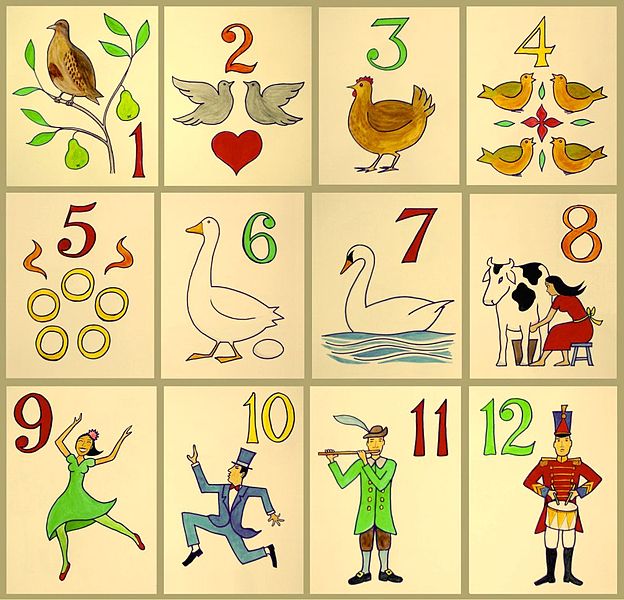
From 1558 until 1829 Roman Catholic Christians in England were not allowed to practice their faith openly.  Someone during that long era wrote this carol as a catechism song for young members of the church.  Each verse in the song is code for a truth of the faith which the children could then remember.

The partridge in a pear tree is Jesus Christ.
The two turtle doves are the Old and New Testaments.
Three French hens stand for faith, hope, and love.
The four calling birds are the four Evangelists, Matthew, Mark, Luke, and John.
The five golden rings recall the Torah, the first five books of the Old Testament.
The six geese-a-laying stand for the six days of creation.
Seven swans a swimming represent the sevenfold gifts of the Holy Spirit.
The eight maids-a-milking are the eight Beatitudes.
Nine ladies dancing are the nine fruits of the Holy Spirit.
The ten lords-a-leaping are the Ten Commandments.
Eleven pipers piping stand for the eleven faithful disciples.
The twelve drummers drumming symbolize the twelve items of faith in the Apostles’ Creed.

So, dear friends, Merry Christmas!  The world may have moved on, but the church is still in party mode, celebrating the joyful mystery of the Incarnation, God’s living Word, Jesus Christ.  Rejoice!  Christ is born!

From the Dean’s Desk…

advent4“Cradle and cross are inextricably connected on the fourth Sunday of Advent. Between a lovely tribute to the little town of Bethlehem and the blessed virgin Mary’s magnificent song of praise, the letter to the Hebrews reminds us in no uncertain terms that Christ’s advent is for ‘the offering of the body of Jesus Christ once for all.’ It is the kind of tension in which the church always lives as when in the holy communion—with high delight—‘we proclaim the Lord’s death.’ ” (Sundays and Seasons; Augsburg Fortress Canada)

Or, in The Book of Alternative Services, “Therefore we proclaim the mystery of faith.  Christ has died…” And again, “Therefore we proclaim our hope.  Dying you destroyed our death…”

Roman imperial mythology (Caesar Augustus’ propagandists… sorry, publicity people) at the time that the first ‘First Citizen’ was still alive and on the throne, was already making the claim that Augustus was born of a virgin and was the saviour of the world.  Great story, if you want stronger numbers in the polls, but it was definitely not true.

The Christmas Story by itself – as wonderful as it is, and true, so true in the truest sense of the True Gospel, introducing us to the living Word, Jesus who is the Christ – is not enough all by itself.  Somehow, maybe it’s the angels and the star and the magi (three kings traditionally, although that number is not to be found in Matthew 2), Christmas, this rich and holy Feast of Twelve Days (Christmas Eve through the Eve of the Epiphany of Our Lord, sometimes called Twelfth Night, January 5th), has for many replaced the Resurrection of Our Lord (Easter) as the highest and most powerful Holy-Day for Christians.

While it is a time of great and joyful celebration, twelve whole days’ worth, this mystery that God the immortal Creator should stoop to become mortal creature in the helpless baby of Bethlehem, this wonder-full story, is only the beginning of the journey which takes us to Good Friday and the Cross, and beyond that to the Resurrection.

For several centuries the Christian church probably didn’t make much of Christmas; Epiphany was the great feast other than Easter and Pentecost, because there (January 6th) Christ’s true identity and purpose shine forth in light which darkness cannot overcome.  As the church became more Roman it adapted, baptized, one might say, the pagan Roman feast of Saturnalia, which fell in the second part of December, as a time for celebrating the Nativity of Our Lord.  By the middle of the fourth century A.D. Christmas had pretty much replaced Saturnalia.

Ironically, there is a connection here with Mary’s Magnificat; during Saturnalia there was a social role reversal, or inversion.  Slaves were temporarily free, and within households could even lord it over their master or mistress (always knowing the holiday didn’t last forever and that crucifixion was a regular mode of execution for slaves); for a few days, the mighty were cast down from their thrones and the lowly were lifted up, and the hungry filled with good things.

Serendipity that Christmas displaced Saturnalia?  Perhaps, but happy serendipity, because in God’s vision the changes are not meant to be temporary; in Christ God is not out to turn the world upside down as much as turn it back right side up.  In God’s own self-humbling in Jesus, even to death on a cross, is the ultimate role reversal.  In the third century, Irenaeus put it beautifully when he said, “Because of his boundless love, Jesus became what we are that he might make us to be what he is.”

Christmas:  Jesus became what we are.

Easter:  Jesus makes us to be what he is.

Thanks be to God!

From the Dean’s Desk…

12-13-advent-wreathLast April it was my privilege to spend several days in Denver with the North American Deans’ Conference (Anglican Church of Canada and the Episcopal Church).  The featured guest speaker was Diana Butler Bass, whose most recent book is Christianity After Religion.  While I don’t agree with everything she says and writes, I do agree with much of it, and find her a provocative Christian thinker.  She is a layperson in the Episcopal Church, and a gift to the wider church.

This week she writes in Huff Post Religion on ‘Fox News’ War on Advent.’  It’s a little tongue in cheek, but not much.  I recognize also that others may feel differently than I do about Fox News, but what she writes is, as I noted, provocative, and I believe it’s right on, and is a critique of much more than Fox News.  So, I share it with you as we continue our Advent journey together, waiting in hope, waiting still to celebrate, during the Twelve Days of the Feast of the Nativity of Our Lord, which begins on Christmas Eve and runs through Twelfth Night, the eve of the Epiphany of Our Lord, 6 January 2013.  Thanks be to God!

Here now, Diana Butler Bass:

Happy Holidays! Merry Christmas! Joyful Whatever!

With Fox News seeking to expose those who refuse to say “Merry Christmas” as secular collaborators to the War on Christmas, I confess that I am confused. Fox holds itself up as the network that stands by traditional values defending America and faith from heresies and infidelities of all sorts.

The world waits, and it is time to prepare for the arrival of God’s kingdom. It is not Christmas. It is Advent.

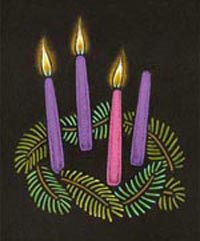
Did Fox get the wrong memo? According to ancient Christian tradition, “Christmas” is not the December shopping season in advance of Christmas Day; rather, it is Christmas Eve, Christmas Day and the Twelve Days following that run until early January. During most of December, Christians observe Advent, a four-week season of reflection, preparation and waiting that precedes the yearly celebration of Jesus’ birth. In many mainstream and liturgical (and even liberal and progressive) churches, no Christmas hymn will pass the lips of a serious churchgoer for another two weeks. If you wander into a local Lutheran, Episcopal or Roman Catholic parish, the congregation will still be chanting the ethereal tones of “O Come, O Come, Emmanuel” or “Watchman, Tell Us of the Night.” There are no poinsettias, no Christmas pageants, no trees or holly, and no red and green altar linens. A few days ago, they might have preached about St. Nicholas — but not Santa Claus. There are no twinkling lights or over-the-top Christmas displays. Just four candles in a simple wreath, two partially burned, two yet to be lit. The mood is somber as December moves toward deeper darkness, and the night lengthens. The world waits, and it is time to prepare for the arrival of God’s kingdom. It is not Christmas. It is Advent.

During these weeks, churches are not merry. There is a muted sense of hope and expectation. Christians recollect God’s ancient promise to Israel for a kingdom where lion and lamb will lie down together. The ministers preach from stark biblical texts about the poor and oppressed being lifted up while the rich and powerful are cast down, about society being leveled and oppression ceasing. Christians remember the Hebrew prophets and long for a Jewish Messiah to be born. The Sunday readings extol social and economic justice, and sermons are preached about the cruelty of ancient Rome and political repression. Hymns anticipate world peace and universal harmony. Churchgoers listen to the testimony of Mary, the Mother of Jesus, who speaks of God:

He has shown strength with his arm;  he has scattered the proud in the thoughts of their hearts. He has brought down the powerful from their thrones,  and lifted up the lowly;  he has filled the hungry with good things, and sent the rich away empty.

Does Fox News want us all to say “Merry Christmas” so we forget about Advent? These, after all, are the four weeks that the Christian tradition dedicates to God’s vision of justice for the outcast and oppressed, not to celebrating the sound of ringing cash registers or Victorian America values.

Ancient Christian saints, theologians and evangelists would be horrified that those who claim to stand for tradition have forgotten the most important aspect of it. Jesus Christ was not born that human beings would spend December shopping or saying, “Merry Christmas.” Jesus was born to confront the rulers of this world with the love and justice of the God of Abraham — that Jesus, the same Jesus who preached the the poor and marginalized were blessed, is the King of kings and Lord of lords. All earthly powers pale before him, the humble born one who will die a political traitor to Rome.

Perhaps Fox thinks it might be best if Christians did not spend too much time contemplating a Savior who promised to overthrow the powers-that-be in favor of a kingdom where the poor are blessed and the last shall be first. That’s probably bad for business and does not exactly fit with their favored political philosophy.

And maybe, just maybe, the real war of this season is the War on Advent.        ~ DBB ~
From the Dean’s Desk…

In the tender compassion of our God the dawn from on high shall break upon us, to shine on those who dwell in darkness and the shadow of death, and to guide our feet into the way of peace.    Luke 1:78-79

I suppose one should be careful of baring one’s soul too often or people might be frightened away, but sometimes it’s worth the risk.  As I get older it seems like I’m gifted with tears more than I used to be.  For one thing, I don’t feel as constrained not to cry if I feel like it, and, for better or worse, maybe that’s because I have sought to follow up my health crisis of 24 July 2007 with the renewed sense of perspective which it brought to me as yet another gift.

Sitting at my desk, the morning sun streaming in through the stained glass windows in my study here at the Cathedral, as it does only in these short days of the year when it rides far down in the southern sky and the nights are longer and longer, I read these verses at the end of this Sunday’s Canticle, which is the Song of Zechariah, and I am moved to tears, tears of joy.

God’s tender compassion!  What an amazing thought!  That word, ‘compassion,’ is from the Latin and it means ‘to suffer with.’  In the tender, suffering-with love of God, a new day is dawning.  Zechariah’s song at the circumcision and naming of his son, John, is a wonderful prophecy, in its best sense, which is sharing God’s word, forth-telling more than fore-telling, although it is both.  In this case, he sings not only of his own son, but also of the light-bringer, the one who will be ‘for us a mighty Saviour, born of the house of [God’s] servant David.’  He sings of the one who will be named Joshua, after the ancient deliverer, the successor to Moses, who brought the people of Israel into the Promised Land.  In Hebrew the name is Y’shua, which means ‘God saves,’ and in Latin pronounced it’s pronounced as Jesus.

This light, God’s living Word of tender compassion from on high, Jesus the Christ, is the one for whom we still wait, the one whose coming (adventus) anciently and presently and distantly shines on those who dwell in darkness and the shadow of death.  Who, dear friends, is not included there at some time or another, in some way, shape, or form?  Tender compassion indeed!  How it is needed in this world, in the Syrias and the Sudans and in the fires of Lhasa! How it is needed in this city, in the gangs and murders and violence and grinding poverty!  How it is needed in our own lives – and here you can fill in the blanks – and in our life together.  How desperately, how longingly, do we need someone, this one, this Jesus, to guide our feet into the way of peace?

Old, bitter conflicts run deep and dark all over the world; some of them we know well, as in the Holy Land, and some of them we try to keep secret, because they run through our own lives and through our own hearts and minds and families, and, yes, through our churches.  Praise be to the Holy One!  God hears our cries, sees our suffering, and, despite it all, we know, because of God’s love shining most clearly and brilliantly in Christ Jesus, that even in the midst of death we live in God’s tender compassion.  So there is hope, hope unlike anything that we can earn, buy, create, or even steal, hope which is gift, pure grace, shining on us and on the whole creation, in the tender compassion of our God.  Thanks be to God! 

From the Dean’s Desk… HAPPY NEW YEAR!

IMG_1171The church year is a representation of the life of Christ in an annual pattern with two main centres:  one is the Christmas event (Advent, 12 days of Christmas, Epiphany) and the other is the Easter event, which begins with 40 days of Lenten preparation, Holy Week, Triduum (Three Days) culminating with the Resurrection of Our Lord, and 50 days – a week of weeks – of rejoicing through the Day of Pentecost.

The new year begins with Advent, a season of preparation that looks forward to Christ’s humble coming at Bethlehem and his glorious return as the Sovereign of the ages at the end of time, all the while considering how he comes to us new each day of our lives.  Historically, purple was the liturgical colour for Advent, the royal colour of the coming Sovereign.  In more recent years blue has been chosen as the colour of hope, a primary theme of the Advent season.

Advent allows a reclaiming of Christmas, as we recognize that we are not bound to the slavery of commercial consumption, and so can prepare ourselves for the Feast of the Nativity of Our Lord.  “Krissmuss” has become a largely secular and commercial festival today.  The early church may have begun its own celebration of Christmas (centuries after the first celebration of Easter, and long after Epiphany had become a holy day for the faithful) as a response to a non-Christian holiday.  In 274 A.D. the pagan Roman emperor Aurelius declared that citizens of the empire must celebrate December 25th — the winter solstice on their calendar — as the Feast of the Unconquerable Sun.  Christians in the Roman Empire, resisting this, may have adopted December 25th as an alternative festival, the birthday of Christ, the Sun of Righteousness (see Malachi 4:2).

Observing Advent can help us carry out a genuinely Christian preparation for the Feast of the Nativity of Our Lord – all twelve days of it, from Christmas Eve through the Epiphany – in our homes, in our church, in our lives in the world.  Advent’s familiar sights and sounds stir in us a Christian readiness to receive our Lord and Saviour.  The readings for Advent and the Advent hymns and music sharpen our sense of the world’s, and our own, need for redemption and prepare us to celebrate the great mystery of God’s incarnation, the gift of the Word become flesh in Jesus Christ our Lord.  Thanks be to God!

You know what time it is, how it is now the moment for you to wake from sleep.  For salvation is nearer to us now than when we became believers; the night is far gone, the day is near.

Romans 13:11-12

From the Dean’s Desk…

The Gospel reading for this Sunday of Christ the King, commonly called Reign of Christ in more recent years, is John 18:33-37.  Interesting things happen…

Pilate thinks he’s the judge, thinks Jesus is on trial. Soon he finds, no, it’s the other way round; Jesus is the judge, and he himself (With his emperor!) is in the dock. Painful truth.  Graceful truth.

The King who judges Pilate, and us, will soon die for his subjects.  Thanks be to God. The King who died is risen and lives forever, in his subjects… But AS we are his subjects.  Are we his subjects?  Who, or what, is sovereign in our lives, in our life together?

As we are his subjects, we are his servants, his presence in the world. As we are his slaves, we know perfect freedom, and the world is loved. St. Teresa of Avila (1515–1582) wrote the poem below, a wonderful poem for the Sunday we call Christ the King.

Christ Has No Body

Christ has no body but yours,

No hands, no feet on earth but yours,

Yours are the eyes with which he looks Compassion on this world,

Yours are the feet with which he walks to do good,

Yours are the hands, with which he blesses all the world.

Yours are the hands, yours are the feet,

Yours are the eyes, you are his body. Christ has no body now but yours,

No hands, no feet on earth but yours,

Yours are the eyes with which he looks compassion on this world.

Christ has no body now on earth but yours.

To him who loves us and freed us from our sins by his blood,  and made us to be a kingdom, priests serving his God and Father, to him be glory and dominion forever and ever. Amen.

From the Dean’s Desk…

“Seek the welfare of the city where I have sent you… and pray to the LORD on its behalf, for in its welfare you will find your welfare.”  Jeremiah 29:7

 On Friday evening, 9 November, I had the pleasure of going to the Winnipeg Symphony Orchestra.  My wife was away in Minnesota visiting her family, so I went alone.  First on the programme was the world premiere of a new work by Winnipeg’s own Sid Robinovitch, commissioned by the Seven Oaks Historical Society (SOHS), Red River.  The four movements of the piece are Confluence, Enterprise, Reminiscence, and Contention.  The work was commissioned by SOHS as part of the bicentenary celebrations of the Red River Settlement of 1812 and following, sponsored and made possible for those poor Scottish farmers by Thomas Douglas, the fifth Lord Selkirk.

Although there was other wonderful music that evening, my focus was on Red River.  As Dean of this Cathedral (parish established in 1820, churchyard in 1812 with the burial of the first of the Selkirk Settlers to die) I was invited by SOHS to attend a reception during intermission, including an opportunity to meet Sid Robinovitch.  I gladly accepted.  Our Cathedral has a close and supportive relationship with SOHS, and it’s one avenue I see for strengthening our connection to the community in which we, as St. John’s Cathedral Parish, live and move and have our being, to crib a bit from the Apostle.  There are many good connections already, but I believe that we still need to build, to strengthen, the relations between church and community further.  Yes, we have an evangelical commission, to share the Gospel, that is, in every way that we can, but I understand this to include Jeremiah’s words above; we are not separate from the City, we are part of it.  Most immediately we are part of the North End, on both sides of Main Street.

I believe that the Spirit is saying to this church, pray for the welfare of the city, but also work for its welfare, as an integral part of it, in every way with every gift that you have.  If the past year is any indication, I believe that you, as St. John’s people, agree with me.  Use your imagination, your gifts, and let’s work even harder to build our community, for in its welfare we will find our welfare.  Thanks be to God!

From the Dean’s Desk…

“And my God will fully satisfy every need of yours according to his riches in glory in Christ Jesus.”  Philippians 4:19  

This weekend we begin our walk together to Consecration Sunday, December 2nd. Stewardship is fundamental to our lives as individual disciples of Jesus, and to our life together as a community of disciples here in the Cathedral parish, and as we participate in the life of the larger church, including the Diocese of Rupert’s Land, the Anglican Church of Canada, and the whole body of Christ in the world.

So, take a look at part of the Gospel reading for this Sunday from the 12th chapter of St. Mark: [Jesus] sat down opposite the treasury, and watched the crowd putting money into the treasury. Many rich people put in large sums.  A poor widow came and put in two small copper coins, which are worth a penny.  Then he called his disciples and said to them, “Truly I tell you, this poor widow has put in more than all those who are contributing to the treasury.  For all of them have contributed out of their abundance; but she out of her poverty has put in everything she had, all she had to live on.” 

This amazing woman of faith whom Jesus watched as she put her tiny donation into the offering plate (temple treasury) sets a very high bar, but don’t despair.  The story reminds us most basically that we who call ourselves disciples of Christ all receive the holy call as part of our baptismal vocation to be faithful stewards of everything that God has entrusted to us, which is everything we have and everything we are.  The word ‘steward’ in the Bible is from a Greek word which means ‘the one given charge of the affairs of a… household, directing the [other] household servants, and controlling the household expenses on behalf of the master.’  (Interpreter’s Dictionary of the Bible)

In the next weeks we’ll listen as three parishioners share their own steward-story, as part of our community journey of faith, growing in our own trust of God’s never-failing faithfulness, leading us to consider our own commitments of everything that God has entrusted to us, in whatever form, time, talents, or treasure.  Money is simply one very concrete way of measuring a part of the full treasure of God’s grace and goodness with which God has blessed all of us.

Every member of our parish will receive a stewardship packet including a letter from me and Ted Ash and Willi Slipetz, an informational sheet, What is Stewardship, a Time and Talent Offering sheet, and an Estimate of Giving Form.  On Consecration Sunday, December 2nd, all the completed forms, representing us, will be brought forward during the 10:30 worship service and presented for consecration, on behalf of the master.  A Luncheon Celebration will follow worship, downstairs in the John West Hall.

I hope and pray that all members can be with us that day.  It’s also the first Sunday in Advent, and what a great way to celebrate New Year’s, giving thanks for God’s faithfulness as we begin a new year on the church calendar, filled with hope because we know that God is trustworthy and true.  We have God’s living Word on that, Jesus Christ our Lord.

“To our God and Father be glory forever and ever.  Amen.”  Philippians 4:20


From the Dean’s Desk…

                                        “To the church of God that is in [Winnipeg], to those who are sanctified in Christ Jesus, called to be saints, together with all those who in every place call on the name of our Lord Jesus Christ, both their Lord and ours:  Grace to you and peace from God our Father and the Lord Jesus Christ.”  (I Corinthians 1.2-3)

It’s a full day we have; on the liturgical calendar it’s All Saints Sunday.  We used to gather for Eucharist on All Saints Day itself, but, our lives being what they are (Too busy?  Too full?), we don’t do that anymore.  But, thanks be to God, we do remember and give thanks for all the saints on the Sunday following, and this year that’s November 4th.

Many will have noticed also that this year Remembrance Day – always November 11th, an immoveable ‘feast’ – falls on a Sunday.  Since the very beginnings of the Royal Winnipeg Rifles in 1883, the Regiment has been associated with this Anglican Cathedral Church of St. John the Evangelist.  This year, since the band and members have to be at their Minto Armoury on the 11th itself, they have asked to join us a week earlier.  So we welcome them into our All Saints celebration, and join them in giving thanks and remembering all those who have fallen for Canada, for our freedom and the freedom of others.  We will remember them.

But the primary focus of our liturgy is always on our freedom in Christ and the freedom promised for the whole creation.  In the Sacrament of Holy Baptism, in the waters of death and life, God creates saints (people ‘made holy,’ or sanctified) by putting sinners to death, joining us to the death of Christ, and raising us to new life as disciples, risen with Christ.  The primary vocation, or calling, of every saint, every person ‘made holy’ (sanctified has the same root as saint), is the baptismal vocation.  Although we are all sinners, God has, in Christ Jesus, made us all to be saints.  The Lutheran phrase is simul justus et peccator (at the same time both saint and sinner).  In the Sacrament of the Holy Eucharist God regularly forgives the sins of all the saints.  We do not justify ourselves, make ourselves to be holy.  That is God’s mysterious work of grace, a gift of the most amazing and wonderful kind which we receive at the Lord’s Table, given in his own body and blood.  We will remember Him.

We give thanks for members of the Canadian Forces who have given of themselves in service to our country, in death and in life, including the members of the Royal Winnipeg Rifles with us in worship.  While we also give thanks for the unique privilege of being Canadian, we are members of an eternal Dominion (Cf. Psalm 72.8), the Reign of God, and we give thanks for all who have gone before in the faith, including the millions who have been martyred through all the centuries and millennia, and who are martyred still even in this twenty-first century.

We give thanks to God always for extraordinary grace shining in the lives of ordinary people, the light of Christ which shines in all of us, but somehow more brightly yet in those sisters and brothers through the ages whom we have traditionally called saints, as in Saint John the Evangelist, for example.  Through the light of Christ shining so clearly in them, others have seen their good works and given glory to the Father in heaven.  (Cf. Matthew 5.16)  May that same light shine always in us.  God will remember us.

“Greet every saint in Christ Jesus…  All the saints greet you…  The grace of the Lord Jesus Christ be with your spirit.”  (Philippians 4.21-23)